Healthier roots. Heavier harvests.
Inline oxygen injection holds dissolved oxygen high from batch tank to dripper, so roots keep building and your inoculants can establish. Measured at GB Sciences: +15% final yield, one site. Installs in 1–3 days.
Why it matters in your rooms
Nutrient uptake is active transport, and the root pays for it with energy it can only make with oxygen. Hold dissolved oxygen high all the way to the root surface and the plant builds more root, the beneficial microbiology in your program gets the conditions it needs to establish, and root pathogens lose the low-oxygen pocket they depend on.
Measured at GB Sciences, one site (+30% biomass at the same site)
GB Sciences · customer-reported
Reported by CLTVTD Genetics (propagation, not flower yield)
Your room is dialed in. Your root zone isn't.
You control light, VPD, EC and CO₂ to the decimal. Then the water enters the substrate and the measuring stops. Dissolved oxygen falls as roots and microbes consume it. Air stones lose efficiency within weeks. Biofilm thickens on drippers and root surfaces, adding oxygen demand of its own. In that low-oxygen pocket, uptake slows, root growth stalls, the aerobic biology you inoculated loses ground, and Pythium and Fusarium get the one condition they need to compete. It is the one input in the room without a probe on it.
Grow the root. Favor the biology. Lower the pressure.
We inject concentrator oxygen as ultrafine bubbles into the irrigation line you already run, and hold dissolved oxygen high all the way to the root surface. Roots build faster and finer, so there is more of the organ that does the feeding. Your aerobic beneficials get the conditions they were selected for, and root pathogens lose the low-oxygen niche they exploit. Continuous scouring keeps biofilm thin on lines and drippers. Oxygen is not a sanitizer: it works alongside your sanitation program and slows how fast a cleaned system slides back between events.
An injector, an oxygen source and a meter, on the line you already run.
Sized to your irrigation flow, not to a catalog number. Your quote names each part, where it goes on your line, and the circuit it needs.
- HardwareA titanium-core inline injector sized to your line, a PSA oxygen concentrator matched to it, and an optical dissolved-oxygen meter to read the result.
- InstallTies into your existing piping in 1–3 days. Hours of interruption on the treated line, not days.
- Lead time4–6 weeks from down payment to hardware on site.
- PowerA dedicated GFCI-protected circuit, commonly about 220 V / 30 A. The exact spec is in your proposal.
- Warranty3 years on non-moving parts (piping, injectors, cavitators); 1 year on moving parts (pump, oxygen generator).
- MaintenanceInjectors and cavitators have no moving parts. Pumps and oxygen generators are serviced every six months.
- Ways to buyDirect from Kairospace, through your hydro store, or lease-to-own on 3–4 month terms with lease fees credited toward the purchase.
- Proof firstA pilot over one to two harvests, a treated room against a control room. Pilot fees can credit toward the full system, up to 100% on structured trials.
Measured and reported in working rooms
Each figure names the site and who took the reading. One site is a result there, not a forecast for your rooms.
+15% final yield · measured
“The weight of that strain went from around 0.23 lbs per plant before, to 0.31 lbs after install.” That is biomass on one strain. Across the site, biomass rose 30% and saleable dried flower rose 15%; the gap is harvest index, drying and trim.
Filters cleaned once a week, not twice
The grower reports filter cleaning cut from twice a week to once a week, and attributes it to less biofilm build-up in the lines. It also reports dissolved oxygen held at about 22 ppm from the RO tank to the drip emitters.
+25–35% cuts per mother · reported
“Since installing the Kairospace system, our DO levels are stable and showing significant improvements, with an increase in average cuts per plant of 25–35% while producing a healthier mother stock root zone.”
Shorter veg and prop time (reported)
“Veg and prop time has been shortened, and we harvested the first room after 6 weeks with an increase in yield.”
Denser lower buds, in the grower's words
“The larf is getting denser and turning color.”
Overall plant health
“Adding O2 has given excellent results. Overall plant health is through the roof.”
Field note
“The DO seems to be doing wonders on our plants.”
What changes at the root
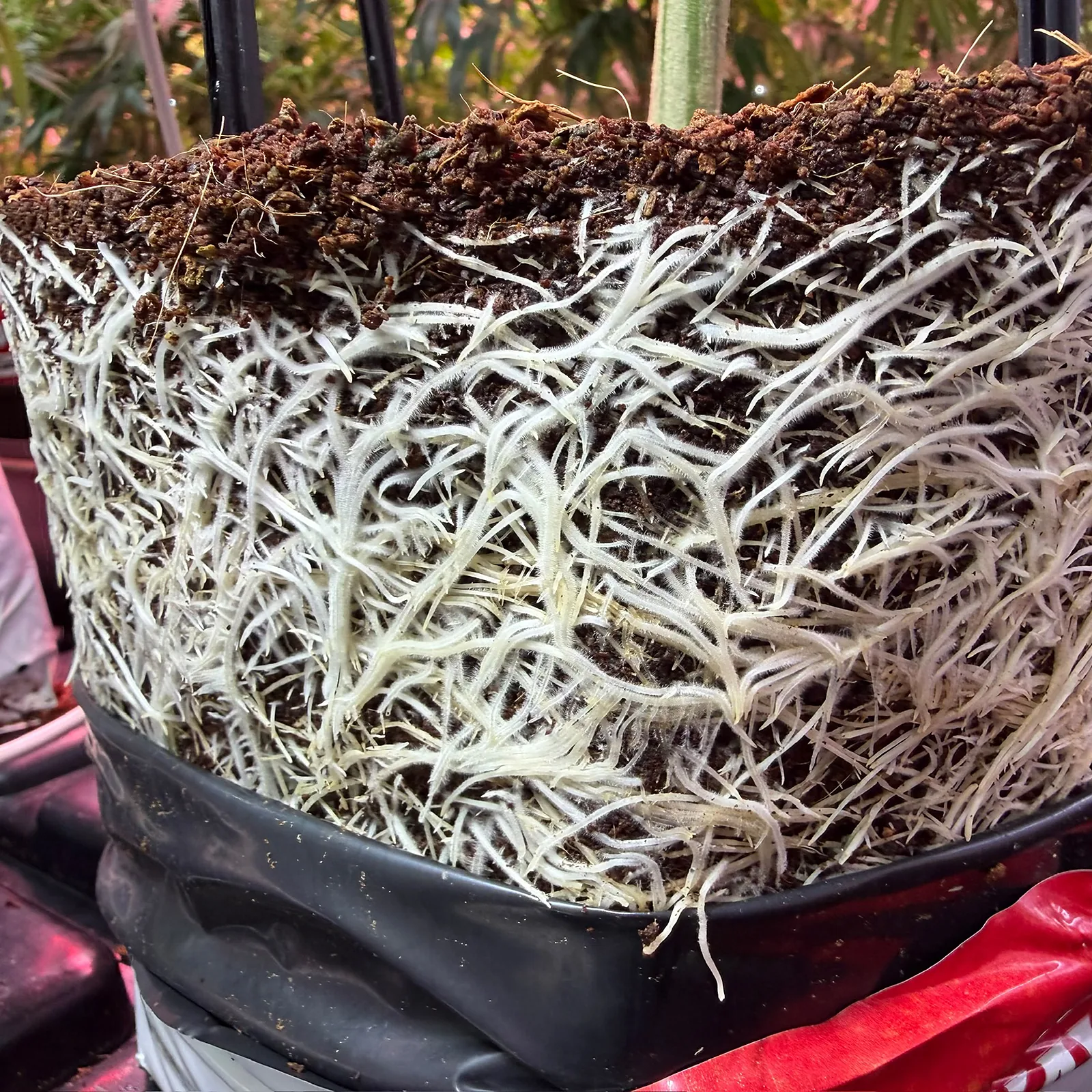
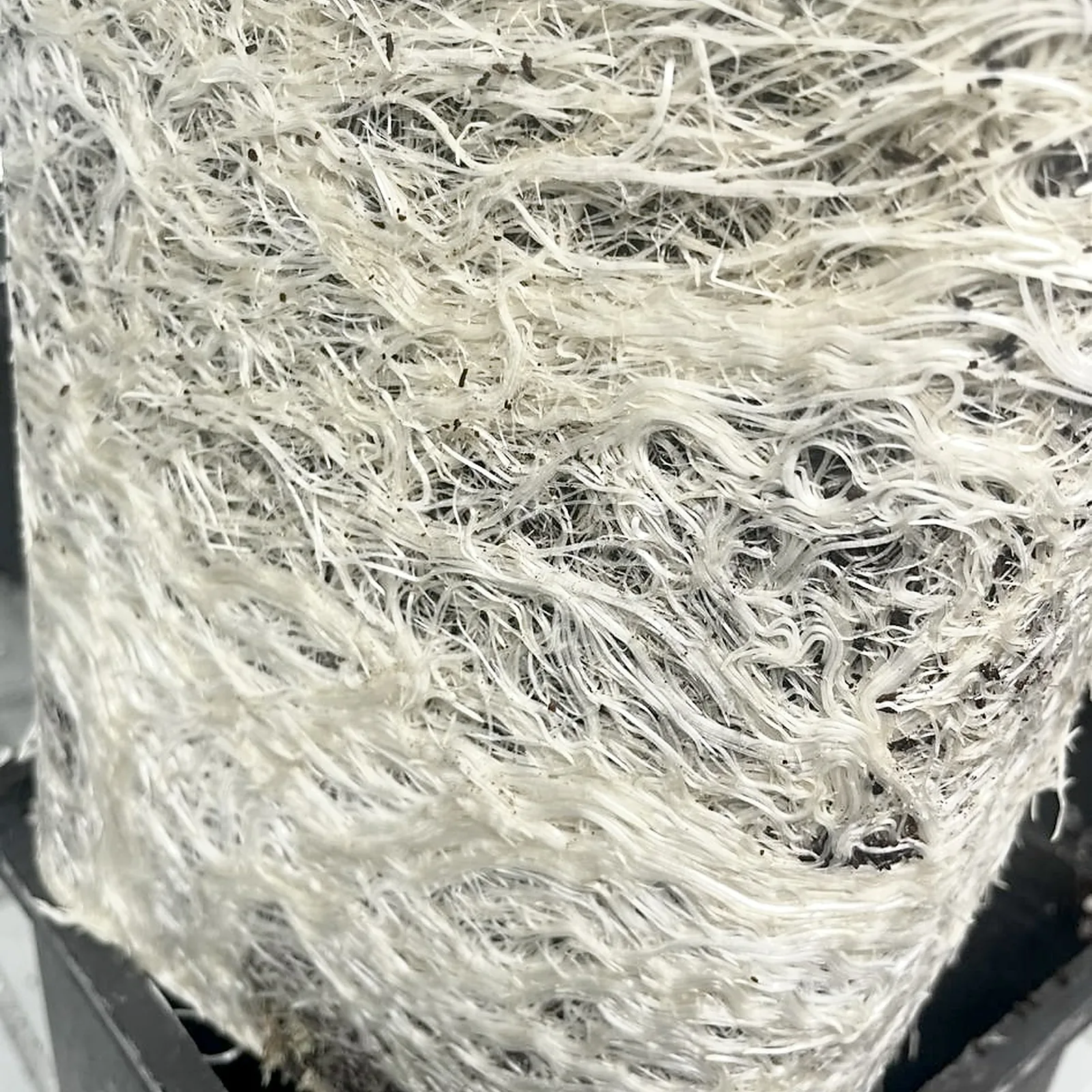
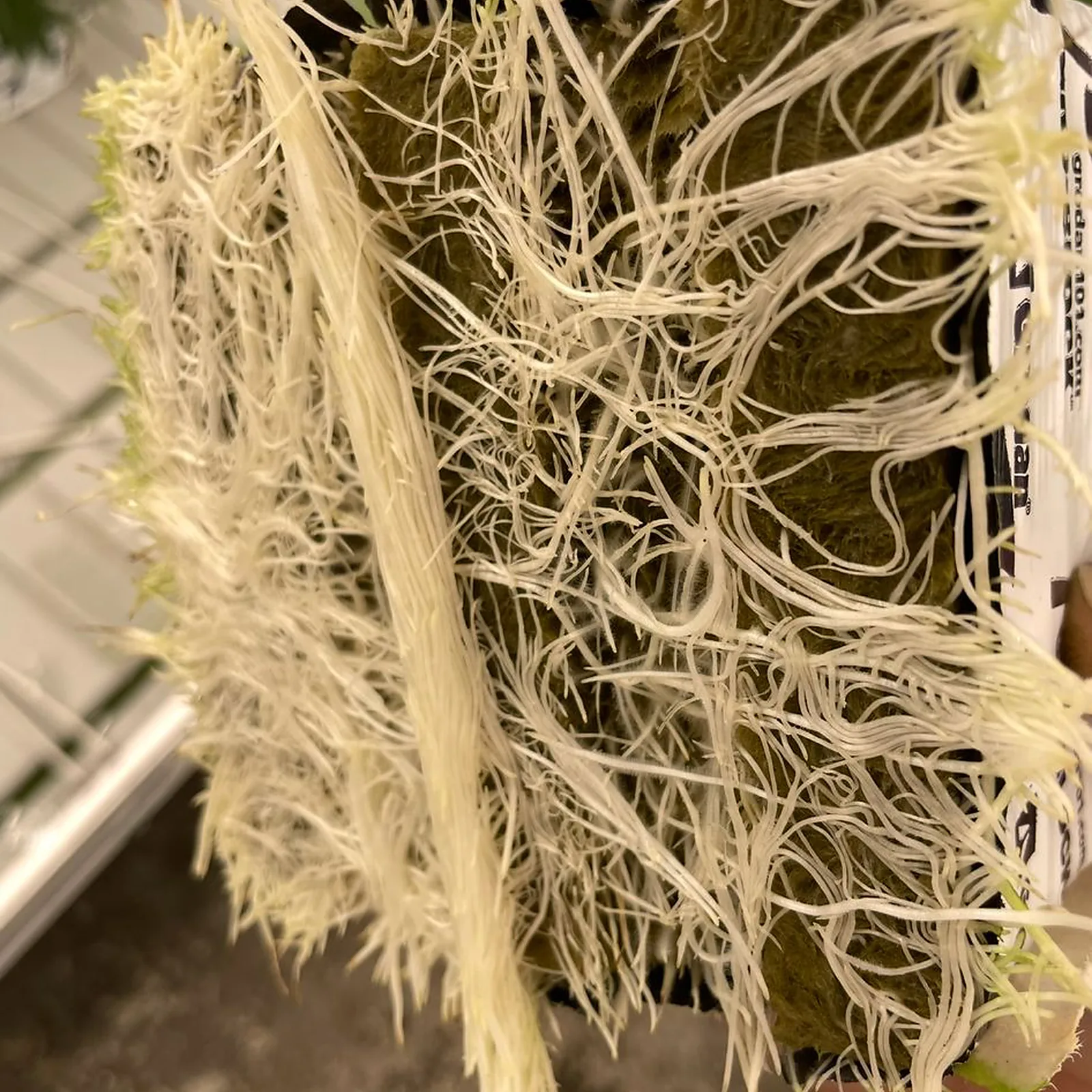
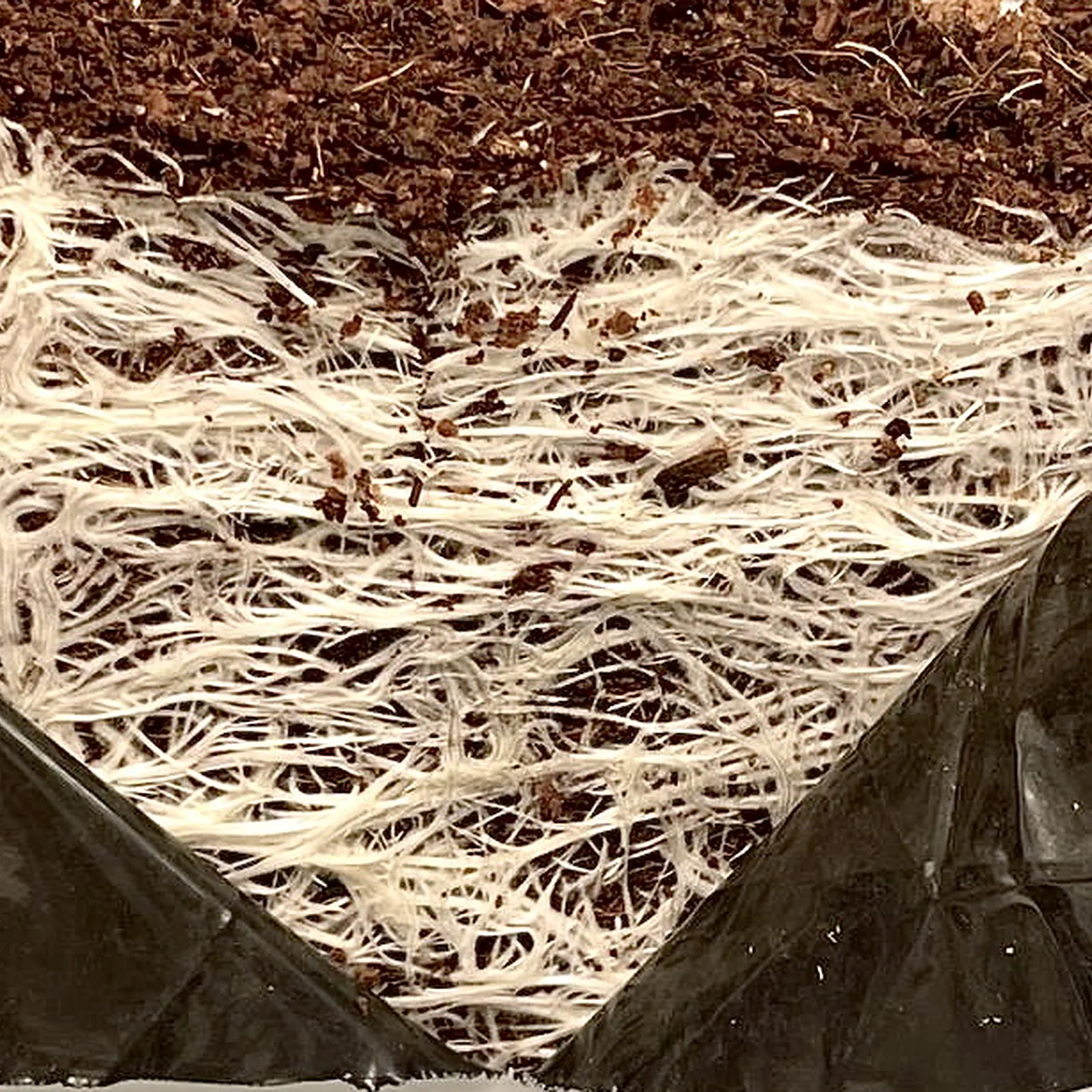
Root development you can lift out of the pot
Moving nutrients into a root cell is active transport, and active transport is paid for in energy the root can only make with oxygen. Hold dissolved oxygen high at the root surface and the plant spends that energy building root: finer laterals, more root hair, more absorptive area through the full depth of the medium. Root mass is the ceiling on everything above it.
The conditions your biology was selected for
Bacillus, Pseudomonas, Trichoderma and the rest of a standard inoculant program are aerobes. They colonize the rhizosphere where oxygen is, and they stall where it isn't. A root zone held aerobic between irrigations gives the biological program you already pay for the environment it needs to establish, not just the moment you dose it.
Take the low-oxygen niche away from Pythium
Pythium, Phytophthora and Fusarium are opportunists of the oxygen-poor root zone: the saturated pocket, the dead leg, the warm reservoir. Holding dissolved oxygen high takes away the condition they exploit and lowers pressure across the room. It lowers risk; it does not sterilize.
Crop steering with a margin underneath it
Aggressive dry-backs work until the wet phase runs hypoxic and the root zone pays for it. When oxygen stays high through irrigation, you have room to steer generative or vegetative on purpose, and the margin to do it every cycle instead of getting away with it once.
Thinner biofilm, drippers that keep feeding
Ultrafine bubbles carry a negative surface charge and scour drippers, lines and root surfaces with every cycle. Thin biofilm keeps emitters delivering evenly, and it is the difference between a sanitizer that contacts the surface and a dose spent on the layer above it.
Mother stock that keeps up
Root initiation is oxygen-limited before it is hormone-limited. Cultivators running oxygenated water on mothers and props report faster callus and more uniform rooting. CLTVTD Genetics reports 25–35% more cuts per plant from treated mother stock, with what its head grower describes as a healthier mother-stock root zone. That is cuttings off a mother, not flower yield.
Installed on customer sites
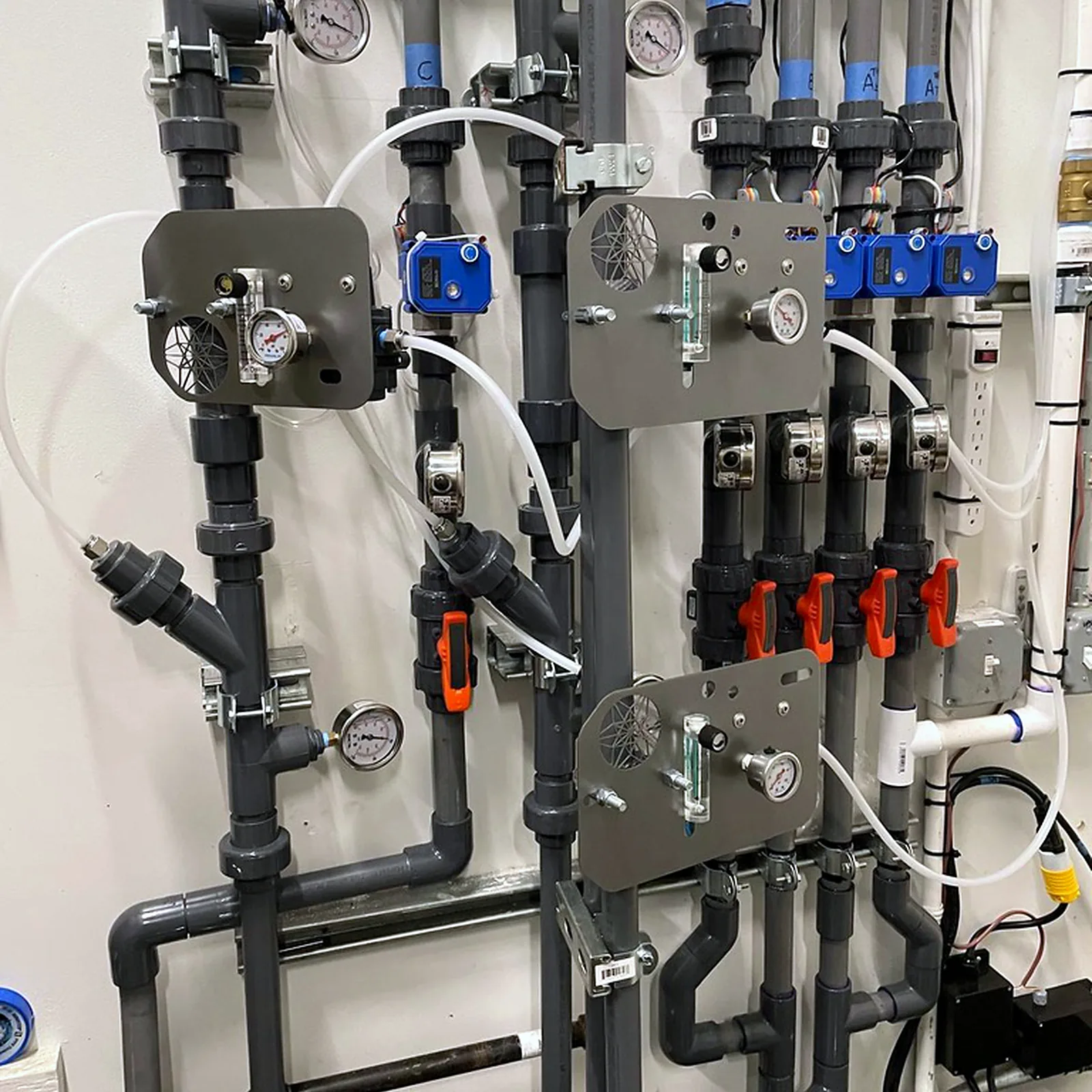
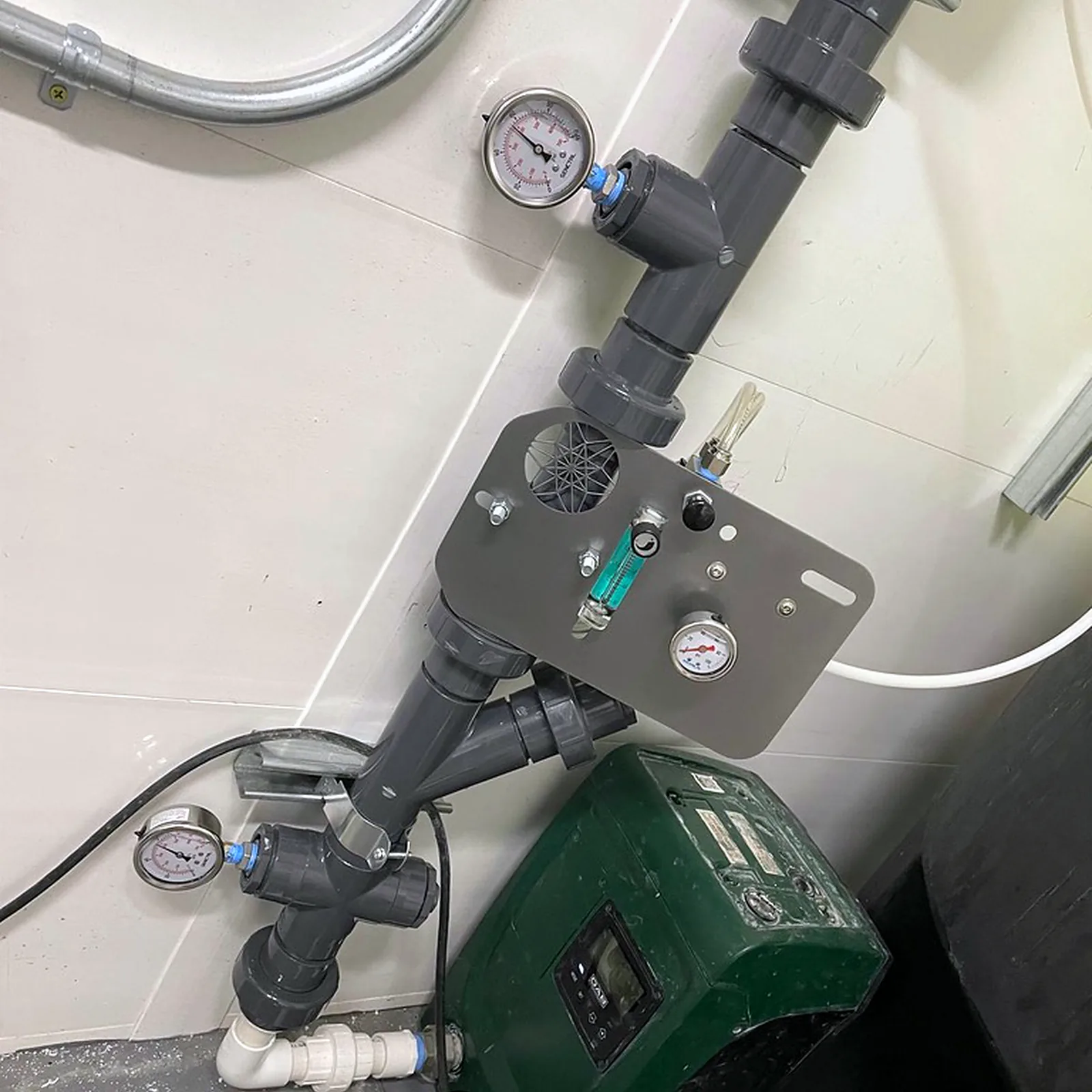
Tell us about your rooms. We'll size the system.
Canopy area, plant count, irrigation setup, water source and your sanitation program today. An engineer replies within 48 hours, with a proposal or with the questions we need to write one.
What cannabis cultivators ask before they buy
How do I buy it?
Three ways. Direct from Kairospace: an engineer sizes the system to your rooms and quotes it. Through your hydro store: ask your store for Kairospace, or tell us your state and we will connect you with the dealer that serves you. Or lease-to-own, on 3–4 month terms with lease fees credited toward the purchase. If you want proof first, a pilot runs one to two harvests in a treated room against a control room, and pilot fees can credit toward the full system, up to 100% on structured trials.
What does it take to install?
A tie-in to your existing piping, done in 1–3 days, with hours of interruption on the treated line rather than days. In the installs pictured on this page the injector sits right after the batch pump, so the feed leaves the batch tank already carrying dissolved oxygen; the irrigation main, or the reservoir or return line on a recirculating system, are the other candidates, and the proposal names the point from your flow rate, pipe diameter and water source. Your side is a dedicated GFCI-protected circuit, commonly about 220 V / 30 A (the exact spec is in the proposal), access to the line and a place for the concentrator. Hardware arrives 4–6 weeks after the down payment.
I already run air stones or a venturi. What does this add?
Air stones and venturis dissolve air, and air is about 21% oxygen, so they top out near air saturation: about 9.1 mg/L at 20 °C (68 °F) and 8.3 mg/L at 25 °C (77 °F), and lower as the water warms. A stone in the reservoir also treats the reservoir, not the line after the pump. Our injector dissolves concentrator oxygen, about 93% pure, into the feed itself as ultrafine bubbles, so the oxygen travels with the water to the dripper. At GB Sciences the grower reports about 22 ppm held from the RO tank to the drip emitters. Keep your stones if you like; the proposal shows what the injector adds on your line.
Does it work with my ozone, peroxide or HOCl program?
Yes. Oxygen works alongside your sanitation program; it is not a sanitizer and does not replace one. Keep your products, dose points and schedule. What changes is the surface your sanitizer meets: ultrafine-bubble scouring keeps biofilm thin between events, so the dose reaches the pipe wall instead of spending itself on the layer above it. The injector core is titanium, and the proposal sets where the injector sits relative to your dose points.
Will the concentrator add heat and noise to my rooms?
Some, and we plan for both. The concentrators on our spec sheet draw 0.6 to 4.5 kW depending on model, roughly 2,000 to 15,400 BTU/h, and most of that ends up as heat where the unit sits. They are rated below 65 dBA and for 5–40 °C (41–104 °F) ambient. Plan it outside the canopy, in a fertigation or mechanical room that can be ventilated, with an oxygen line run to the injector. We size the unit and choose its location with you, and the proposal states its power draw.
Will it work with my inoculants?
The mechanism runs in their favor. Bacillus, Pseudomonas, Trichoderma and the rest of a standard inoculant program are aerobes: they colonize where oxygen is and stall where it isn't, so a root zone held aerobic between irrigations gives them the conditions they need to establish. That is a mechanism, not a colonization rate we have measured. Hold the oxygen, then measure your own rhizosphere.
How do we measure dissolved oxygen in the root zone?
With the instruments that come with the system: optical dissolved-oxygen meters, pH probes and data logging. On a pilot, dissolved oxygen, pH and your KPIs are logged from day one in both the control and the treated room, and you see the readings at every checkpoint. The results report is your data, not our marketing.
What does a pilot look like in a cultivation facility?
One room as control and one as treatment, over one to two harvests, instrumented the same way. We capture your baseline, agree the success criteria in writing, and review the readings with you at agreed checkpoints. You get a written results report, baseline against treated. Scale up with pilot fees credited toward the full system, or stop and keep the data. For scale: at GB Sciences we measured +30% biomass and +15% final yield, one site and two different metrics, not an expected value for yours.
What the research says, and what we build
Each problem below is paired with the published work on it and with the hardware that puts the mechanism in your line. Figures are other people's trials unless marked KST field data.